Why Keep Score?#
Baseball has been recorded on paper longer than almost any other sport. Before radio, before television, before the internet, there were scorecards. Fans in the grandstands kept their own tallies. Newspapers published box scores the next morning. Official scorers tracked every pitch and play for the historical record. That tradition hasn’t faded — if anything, it’s stronger among fans who want a deeper connection to the game.
So why do people still keep score? And why might you start?
You Watch Differently#
There’s a peculiar thing that happens when you open a scorecard. The game slows down. You start watching between the pitches instead of just waiting for contact. What’s the count? Is the pitcher nibbling at the corners or challenging the hitter? Where are the runners? What does the defense look like?
Scoring forces you to pay attention to all of it, because you’ll need to record it. And paying attention to all of it makes baseball — a game sometimes unfairly accused of being slow — genuinely compelling from first pitch to last out.
That said, you don’t have to be perfect about it. Miss a play while you’re grabbing a hot dog or explaining the infield fly rule to your kid? That’s fine. BaseballScorer is powerful enough to satisfy the detail-oriented fan who records every pitch, but forgiving enough for the casual viewer who just wants to follow along. If you fall behind, the app’s MLB catch-up tools can fill in what you missed — one play at a time or all at once. No field left blank should ever stop you from enjoying the game.
You Build a Memory#
A completed scorecard is a record of something that happened and will never happen exactly the same way again. The box score tells you the final line. The scorecard tells you the story: the pitcher who cruised for six innings before running into trouble, the cleanup hitter who went 0-for-4 but drove in two runs, the double play that ended a bases-loaded threat in the fifth.
Flip through a stack of old scorecards and you have a diary of games you saw. Scores forget themselves. Scorecards don’t.
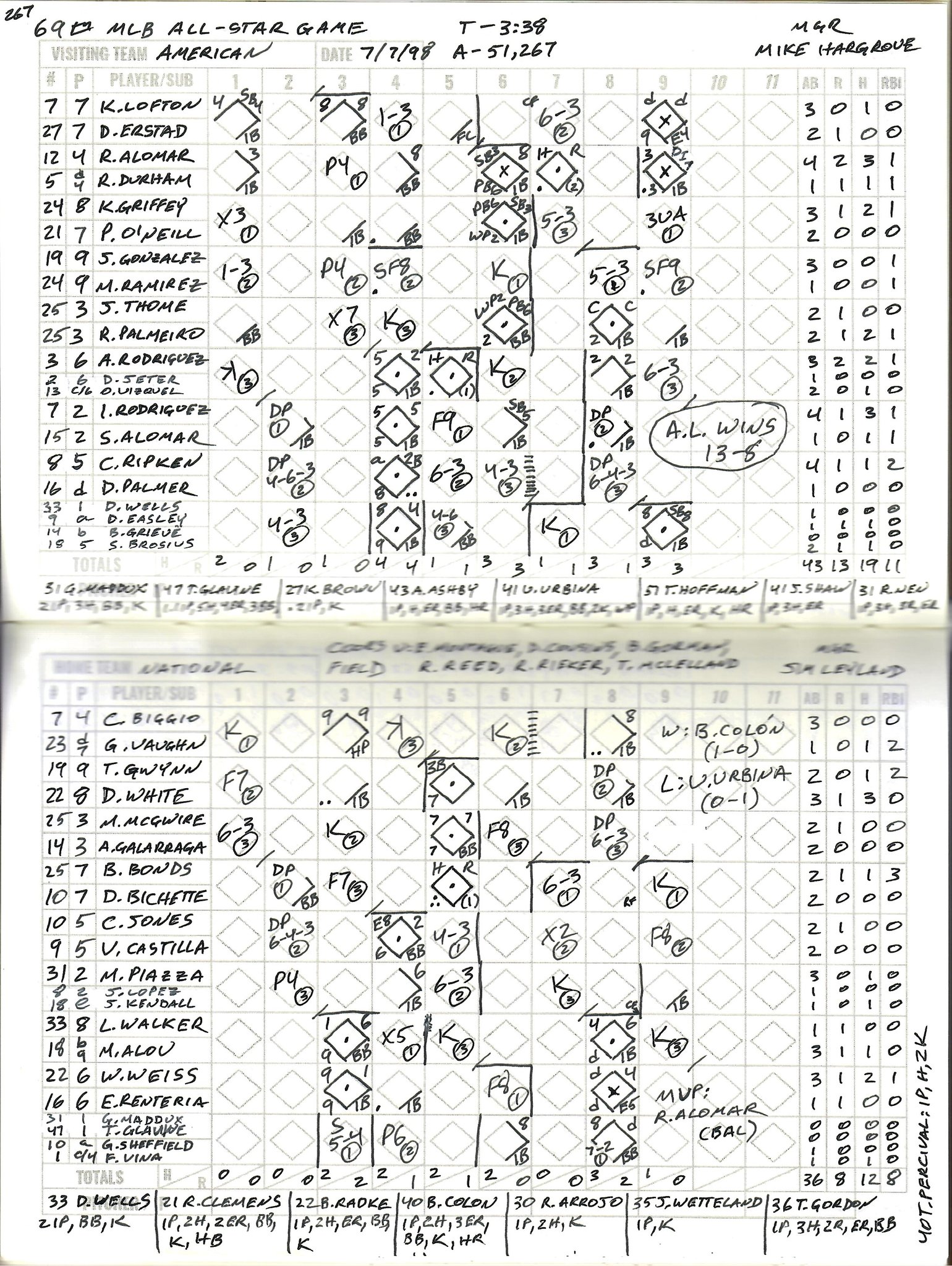
Here’s a hand-scored card from the 1998 MLB All-Star Game. The roster reads like a Hall of Fame ballot — Ripken, Piazza, Griffey, Gwynn, Clemens, Chipper Jones — and the heavy substitutions typical of an All-Star game make it a test of any scorer’s bookkeeping. Every substitution, every pinch-hitter, every pitching change is captured on a single sheet of paper.
And then there are the truly rare moments. On April 29, 2007, Troy Tulowitzki turned an unassisted triple play — one of fewer than twenty in Major League history. If you were there, you’d remember it. If you were there and scoring, you’d have the proof.
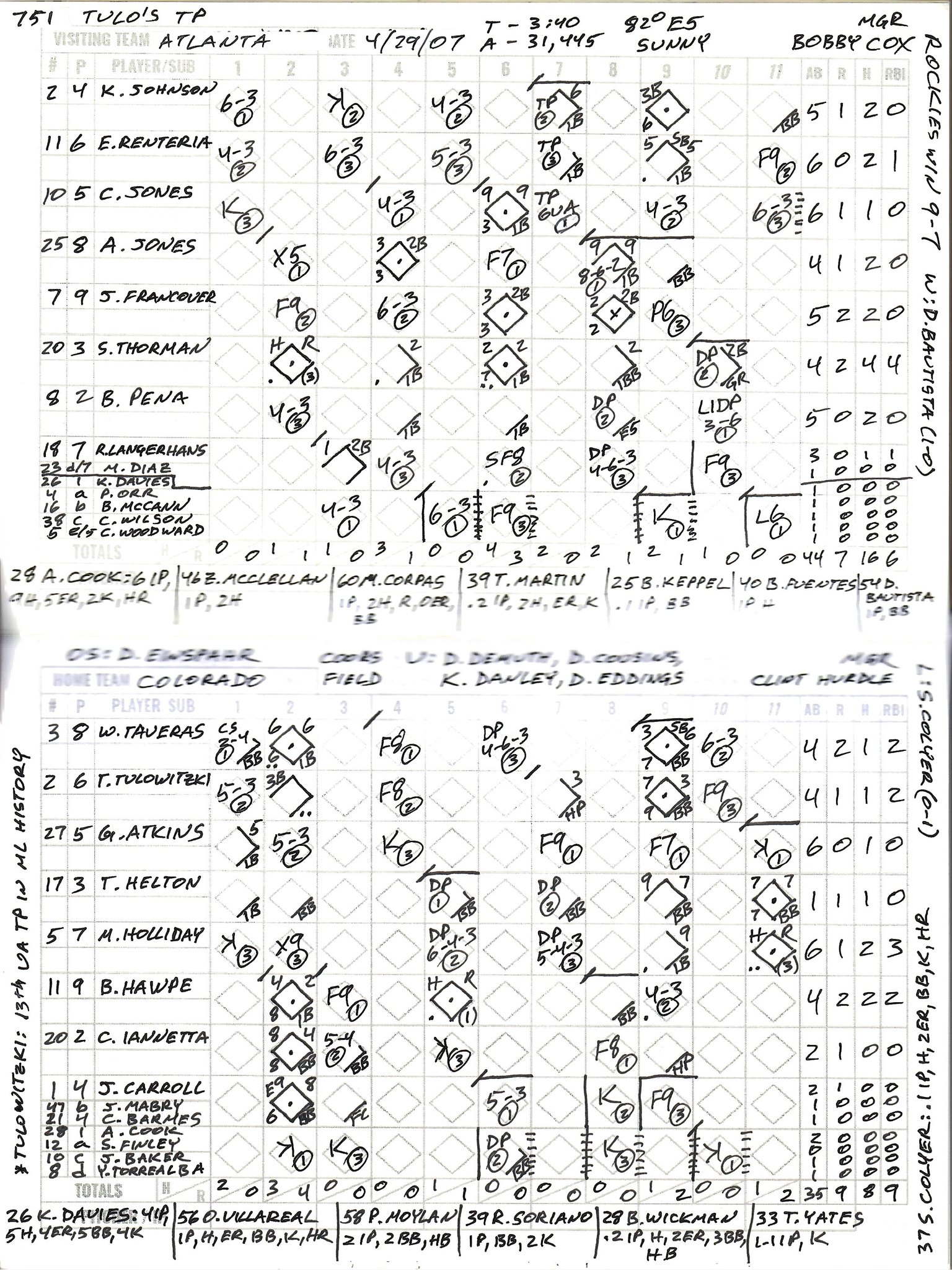
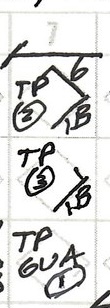
Look closely at the Colorado half and you can see it — three cells in a row, each marked “TP” for triple play, recording the moment Tulowitzki caught a line drive, stepped on second, and tagged the runner coming from first. Three outs, one player, one motion. The notation is almost anticlimactic for something so rare.
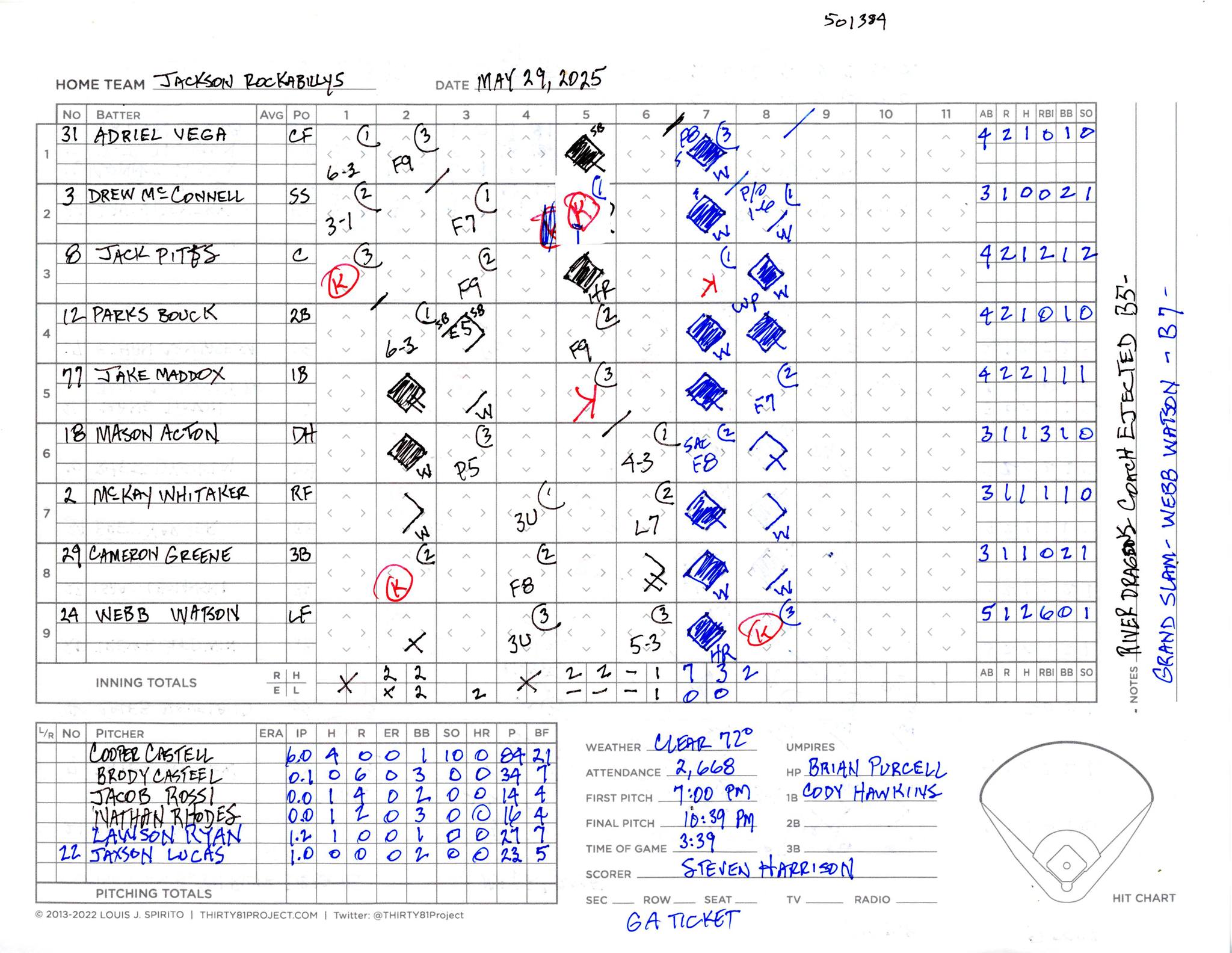
Scorekeeping is alive at every level. This card from a 2025 minor league game between the Algoa River Dragons and the Jackson Rockabillys captures a grand slam (noted in the margin) and uses color coding — red for strikeouts, with switches between blue and black ink to mark pitching changes — making it easy to see at a glance how the lineup fared against each pitcher.
You Understand the Game Better#
Scoring is baseball literacy. Once you know that 6-4-3 means shortstop to second baseman to first baseman, you start hearing that announced and immediately picturing it. Once you’ve tracked a pitcher’s pitch count, you understand why the manager visits the mound in the seventh. Once you’ve recorded a fielder’s choice, you understand why the batter is on base but doesn’t have a hit.
You don’t need to be a baseball expert to start keeping score. But keeping score will make you a better baseball watcher whether you start as a newcomer or a lifelong fan.
Who Keeps Score?#
Scorekeeping happens at every level of the game.
Official scorers are appointed by Major League Baseball to keep the authoritative record of every game. Their decisions — hit or error, wild pitch or passed ball — are final and go into the official statistics. It’s a real job that requires deep knowledge of the rules.
Broadcasters and media keep score in the press box. Radio announcers in particular use scorecards to track what they need to describe for listeners who can’t see the field.
Fans keep score for all the reasons above: engagement, memory, and love of the game. You might keep a meticulous pitch-by-pitch record, or you might just jot down hits and outs. There’s no wrong level of detail.
Youth coaches keep score to track their players’ development across a season. Who’s not making contact? Who’s walking too many batters? A season’s worth of scorecards answers questions that memory can’t.
What You Need#
Traditionally: a paper scorecard (often sold at the ballpark), a pencil, and a basic understanding of the notation. Paper scorecards work great and have a satisfying tactile quality that nothing digital fully replicates.
If you’re scoring on your phone or iPad, BaseballScorer is designed for exactly this. It guides you through each at-bat with tap-based input, tracks the pitch count automatically, and maintains the scorecard as you go — so you can focus on watching the game rather than hunting for the right symbol.
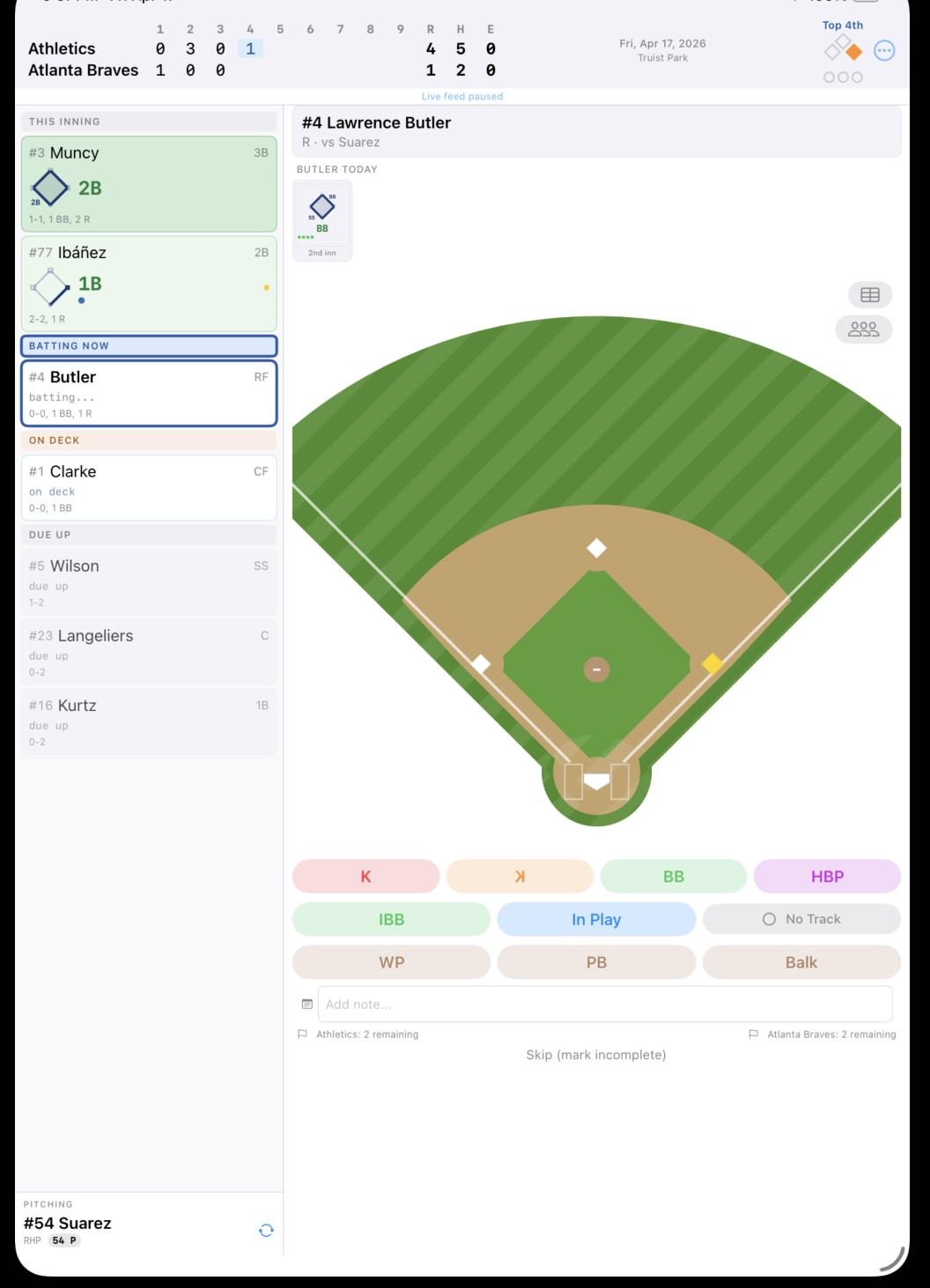
Whether you go paper or digital, the fundamentals are the same. The rest of this guide covers those fundamentals: the scorecard itself, the notation for every outcome, and how to handle the situations that come up in real games.
Start simple. Score one inning. You’ll be hooked.
Hand-scored cards on this page contributed by Rick Moreno and Steven “Pops” Harrison. Thank you for sharing your scorecards and for keeping the tradition alive.